How to keep roasted vegetables from turning soggy
· Editorial team newswithdavidla.com
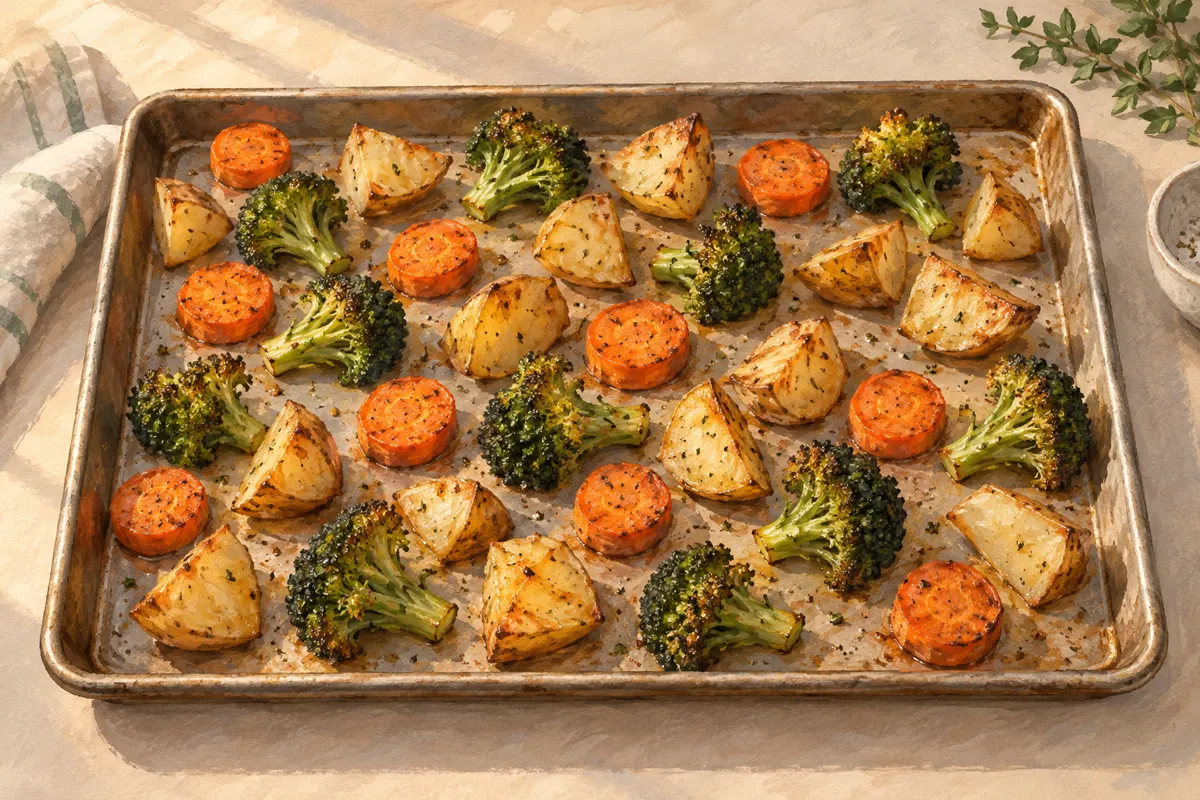
To keep roasted vegetables from turning soggy, dry them thoroughly, spread them in a single layer with gaps, and roast them in a fully preheated oven at 425°F. Group vegetables by cooking time so softer pieces finish before they become mushy. Aim for browned edges and tender centers, rather than expecting every vegetable to turn crisp.
Dry vegetables before adding oil
After washing, pat vegetables dry with a clean kitchen towel. Pay attention to places where water collects, such as between broccoli florets or inside the layers of a cut pepper. Water left on the surface adds moisture to the pan, making it harder to get the browned edges you want.
Once dry, toss the vegetables with olive oil or avocado oil until their surfaces are evenly coated. Use enough to coat the pieces without leaving them greasy or sitting in puddles. Mushrooms and eggplant may need a little more oil than other vegetables. Salt and black pepper are enough for a straightforward batch.
Cut evenly and group by cooking time
Keep pieces of each vegetable similar in size. A tray of carrots cut into both thick chunks and thin slices will be difficult to finish evenly: the smaller pieces may be ready while the larger ones remain hard. Uniform cutting gives you a more useful starting point than relying on the clock alone.
Different vegetables still cook at different speeds, even when their pieces look similar. At 425°F, use these approximate windows to organize your pans, then check tenderness and browning:
- Asparagus and green beans: about 10–15 minutes.
- Bell peppers, mushrooms and zucchini: about 15–20 minutes.
- Broccoli: about 20–25 minutes.
- Carrots, butternut squash, Brussels sprouts and cauliflower: about 25–30 minutes.
- Potatoes and sweet potatoes: about 30–40 minutes.
Give each piece room on the pan
Choose a large rimmed baking sheet rather than a deep casserole dish. The higher sides of a casserole dish can trap moisture around the vegetables. Spread the pieces in one layer with visible space between them; overlapping pieces and crowded piles encourage steaming.
If the vegetables cover the sheet so completely that you cannot leave gaps, divide them between pans or roast in batches. A larger quantity needs more pan space. Adding extra cooking time to a crowded tray does not solve the underlying spacing problem.
Follow a simple roasting sequence
- Preheat the oven to 425°F before putting the vegetables in.
- Wash and dry the vegetables, then cut each type into evenly sized pieces.
- Separate quicker-cooking vegetables from those that need longer. Toss with oil, salt and pepper.
- Arrange the longer-cooking vegetables on a roomy baking sheet and start roasting them first.
- Add quicker-cooking vegetables later, leaving enough space, or cook them on a separate sheet so you can remove them independently.
- Turn the pieces about halfway through their expected cooking time to help both sides brown.
- Check for browned edges and tender centers. Remove vegetables as they finish instead of waiting for every piece to reach the same color.
Suggested combination: roast potatoes on one sheet and zucchini on another, starting the potatoes first. Separate sheets make it easier to take out the zucchini when tender while giving the potatoes more time. If carrots remain hard, let them continue roasting rather than keeping already-soft vegetables in the oven alongside them.
Finish and reheat without losing texture
Add finishing ingredients after roasting when appropriate. A squeeze of lemon, crumbled feta or a drizzle of dressing can add flavor; sauces and dips can also be served alongside. Add honey or maple syrup close to the end of cooking because they can burn and stick to the pan.
For leftovers, use a baking sheet in a 350°F oven until heated through, starting with about 10 minutes. A skillet with a little oil or an uncrowded air fryer basket also works. The microwave is convenient, but it can make roasted vegetables softer. When texture matters, choose a reheating method that helps the edges crisp again.