How to organize a casual badminton session for mixed skill levels
· Editorial team newswithdavidla.com
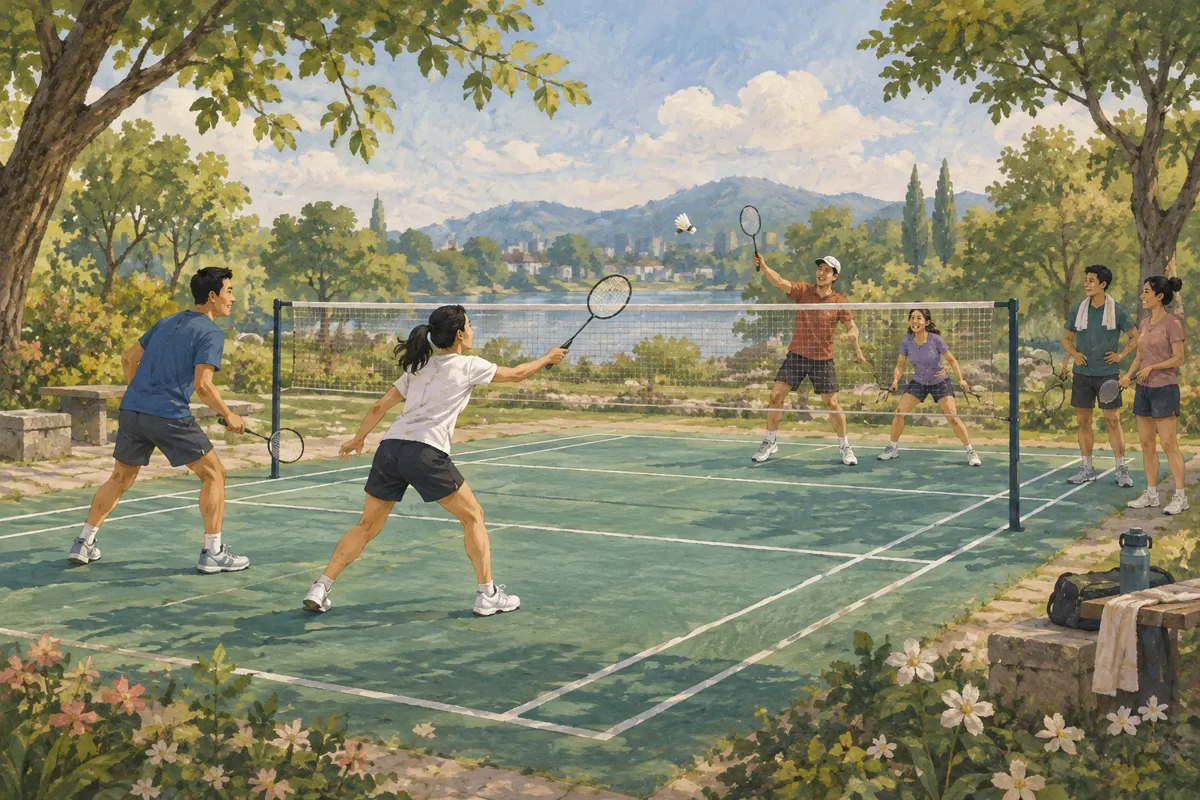
Organize a mixed-level badminton session around short doubles rounds, changing partners and scoring everyone understands. Start with cooperative rallies, pair beginners with more experienced players and rotate everyone when the timer sounds. The proposed format below keeps playing time predictable while leaving room to adjust the challenge.
Set up the session before anyone starts
Confirm how many people are coming, how many courts you can use and whether anyone needs a racket. Ask players to describe themselves simply: new to badminton, comfortable rallying or experienced. Use those answers to arrange the first round, then adjust after watching how the games unfold.
Explain that this is a social session with changing teams. Make the rotation rule clear before play begins so nobody assumes that winners stay on indefinitely. Choose one person to manage the timer and queue; that person can still play.
- Agree which court lines count for your doubles games.
- Put bags and spare equipment outside the playing area.
- Keep spare shuttles nearby, away from players’ feet.
- Choose a waiting area clear of racket swings and neighboring courts.
- Explain how players can take a break and rejoin the queue.
Begin with rallies that include everyone
Give beginners a brief introduction to starting a rally, returning the shuttle and calling it in or out. Keep this practical: demonstrate, let them try and answer questions as they arise. Experienced players can help by sending manageable shots and offering one clear suggestion at a time.
A cooperative opening gives the group a shared task before keeping competitive scores. Gopher’s small-sided badminton activities include cooperative rally challenges and a doubles variation where partners alternate hits. Either can provide variety, although alternating hits adds another rule for newcomers to track.
Proposed opening: spend five minutes trying to build a rally together. Count consecutive returns, restart after a miss and try to improve the group’s previous total. Ask players to send reachable shots rather than chase winners. Move to games once everyone has had a chance to serve and return.
Use short rounds and a visible rotation
Proposed round format: play for six minutes, finish the rally underway when the timer sounds, then rotate. A tied score can remain a tie. Timed rounds make the next change predictable even when one game has long rallies and another has frequent misses.
- Start four players on court and place the other two in a visible queue.
- After the round, move two players off and bring both waiting players on.
- At the next change, move off the two players who stayed on from the previous round.
- Continue that pattern so nobody plays more than two consecutive rounds while others wait.
- Change partnerships at each switch and track rounds played if arrivals or breaks disrupt the pattern.
With eight players and one court, alternate two groups of four, changing partners within each group. With multiple courts, use the same timer across them and move players between groups during breaks. Give returning players the next suitable opening without displacing someone who has already waited.
Balance partners and adapt the scoring
Start by pairing a beginner with an experienced player on each side where possible. Change those pairings regularly so one person does not become the permanent helper. Ask stronger players to leave reachable shots for their partners and agree aloud who will take a shuttle between them.
Proposed casual scoring: award one point for each rally won and keep counting until the timer ends. Explain how you will choose the next server before starting. These are session house rules; players should agree to them together.
- Offer one retry after a missed serve during a beginner’s first round.
- Agree to avoid smashes for a round while players practice returns.
- Replace competitive scoring with a shared rally target.
- Rebalance the teams at the next timed change.
Check whether beginners want an adjustment rather than assuming they do. Some will prefer ordinary competitive play. Keep any change simple, apply it consistently and revisit it between rounds.
Finish with a choice of challenge
Use the final rounds to offer a choice: another balanced doubles game, a cooperative rally challenge or a closer matchup between players with similar experience. If the group tries the alternating-hit variation described by Gopher, first explain that partners must take turns contacting the shuttle and leave each other room to move.
Before packing up, ask whether everyone had enough court time and which format they would repeat. Use those answers to adjust the next session’s round length, pairings or queue. A workable routine is one the group understands and the organizer can maintain without constant interruptions.