How to plan a family game night when children are different ages
· Editorial team newswithdavidla.com
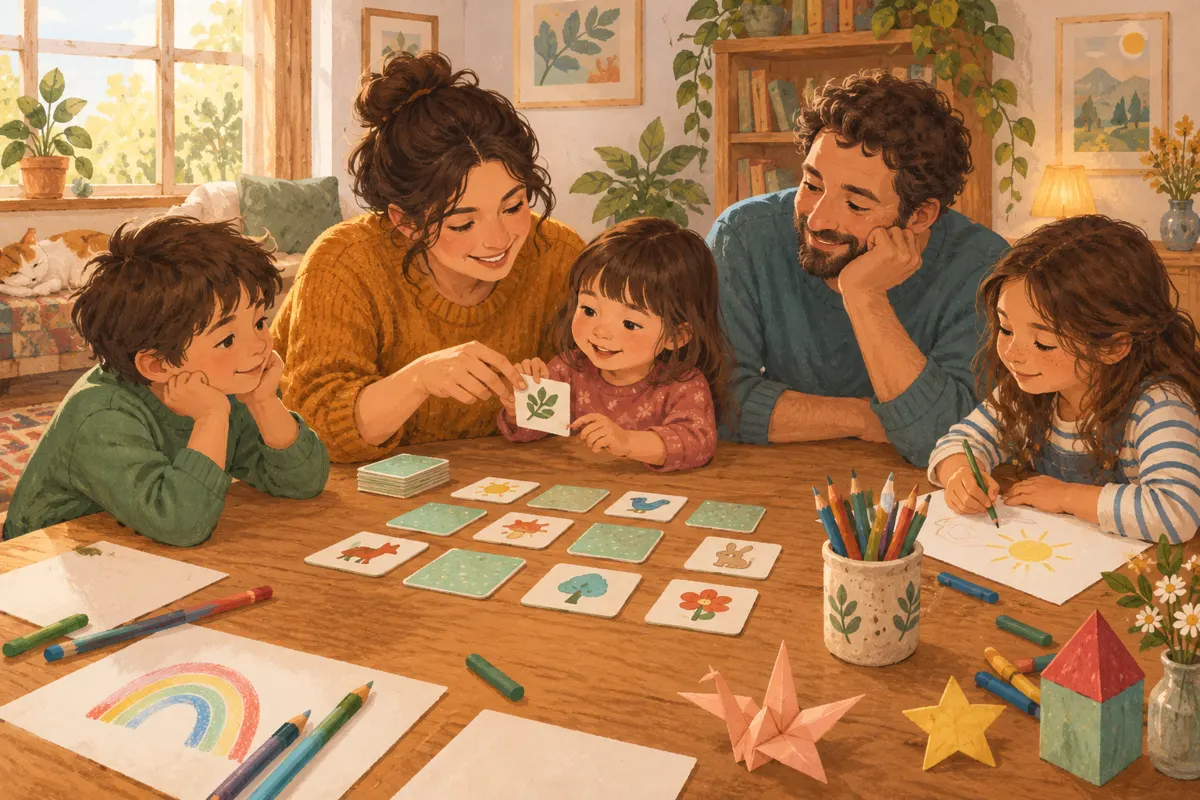
Plan a mixed-age family game night around short rounds, pair younger children with adults when they need help, and rotate who chooses the games. Start with something everyone can join, then leave room for a more challenging game later. The plan below is an editorial proposal you can adapt to your children’s interests, reading abilities and patience.
Choose games by what players need to do
Before choosing a game, look beyond the age label: does it require reading, counting, quick reactions or remembering several rules? A child who cannot read may still enjoy acting, drawing or matching pictures. Kidlist’s suggestions include picture-based charades for non-readers and team drawing games where players can ask teammates for help.
For your opening game, favor a familiar activity with a clear goal and little waiting. Keep the selection small: one shared starter, one team activity and one backup are enough for this proposed format. You do not need to buy something new if cards, paper or a game you already own will work.
- Can everyone participate independently or with a teammate?
- Can you demonstrate a turn instead of giving a long explanation?
- Will players stay involved throughout the round?
- Can you finish a round at a convenient stopping point?
Give younger children a real role on the team
Pairing a younger child with an adult can make a reading-heavy or unfamiliar game more accessible. Kidlist describes team play as a way to explain unfamiliar words and support younger participants. The useful distinction is between helping a child make a choice and making every choice for them.
As an editorial proposal, divide responsibilities clearly. The adult can read the card while the child chooses the answer, draws the picture or moves the piece. Ask, “Which would you pick?” before offering advice. If the child wants help, explain the options briefly and let them decide.
Avoid automatically making the oldest child everyone’s helper. Offer older children a choice between playing independently and joining a team. Change partners between games if someone has spent the whole round reading or explaining instead of enjoying their own turns.
Agree on simple adjustments before starting
Small adjustments can give everyone an understandable task. Kidlist describes simplified UNO play with special cards removed and smaller starting hands, along with picture prompts for charades. Treat any change as a house rule and explain it before the first turn so players know what to expect.
- Use animal or everyday-action prompts for charades, with an adult quietly explaining the prompt when needed.
- Let a drawing team replace a word nobody on that team understands.
- Play an introductory card round with hands visible so you can explain choices.
- Skip cumulative scoring and celebrate the result of each short round.
Keep adjustments consistent during a round. If a rule causes confusion, pause and agree on a change for the next round. Avoid adding several exceptions at once; explaining exceptions can become harder than explaining the original game.
Use a short sequence and rotate choices
Here is a proposed sequence for an evening with different ages. Set the ending around your household’s routine, and promise only as many games as you can comfortably fit. Give each child a turn choosing across successive game nights rather than squeezing every preference into one evening.
- Offer two suitable starters and let the first chooser pick one.
- Demonstrate a practice turn, then play a short round together.
- Switch to a team game, changing partners if helpful.
- Take a brief break and decide whether everyone wants another round.
- Finish with a familiar favorite, or save the next choice for another night.
For a paper-based option, Crème de la Crème describes Paper Telephone: players alternate writing a phrase and drawing what the previous player wrote. Our proposed adaptation is to pair a non-reader with an adult who reads or writes while the child supplies the idea or drawing.
Have an easy way to pause or finish
Before playing, agree that anyone can ask for help or a break. If competition is becoming frustrating, offer a cooperative game; Kidlist includes games in which everyone works toward a shared goal. Another option is to stop keeping score for the next activity, provided everyone agrees.
If younger children are ready to finish, close their part of the evening with a shared cleanup. Older children can continue with a more demanding game if the household routine allows. Ask each person which activity they would choose again, and use those answers when planning the next night.