How to reduce takeout waste when your apartment has limited storage
· Editorial team newswithdavidla.com
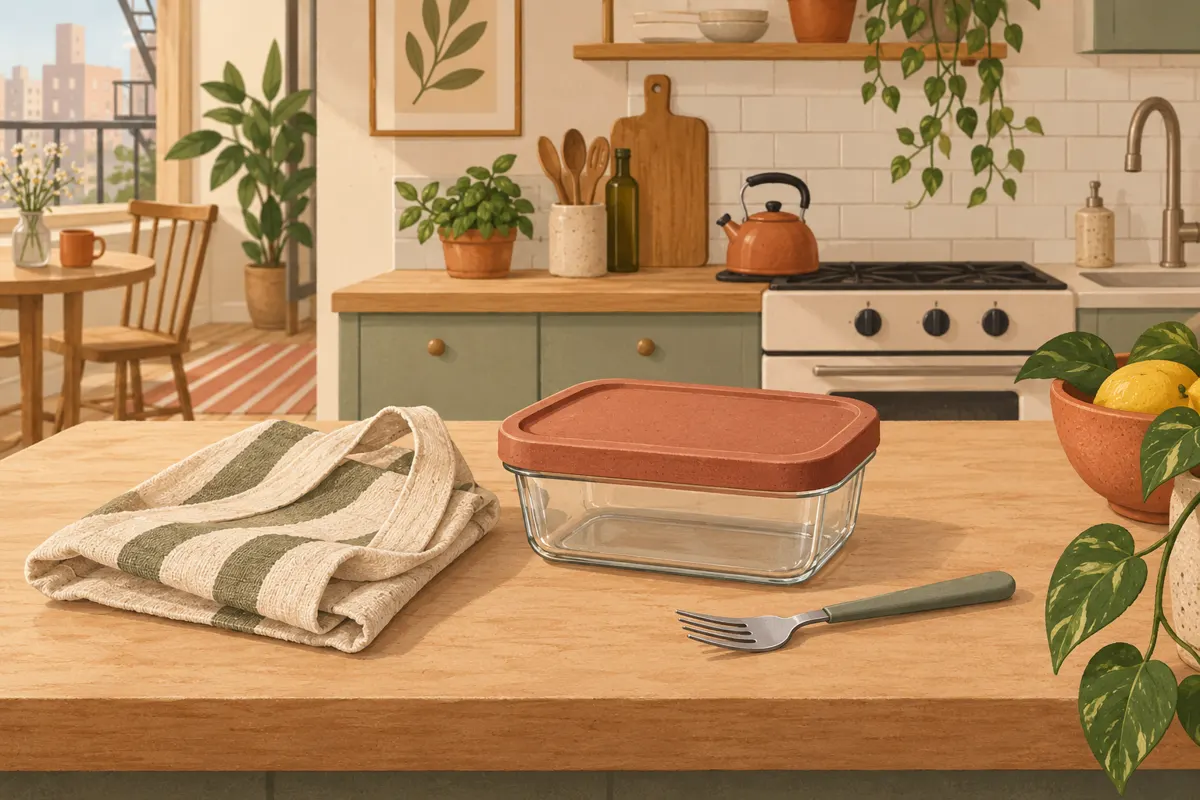
Reduce takeout waste by declining extras before your food is packed, carrying a reusable bag for pickup and using containers you already own when the restaurant accepts them. In a small apartment, the most useful setup is one you can store, wash and use regularly. Start with fewer incoming items rather than saving every disposable container.
Start with the extras you do not use
Look at what remains after your usual takeout dinner. Unopened cutlery, condiment packets, napkins and an extra bag are good places to start. Green Dining Alliance recommends declining unnecessary straws, utensils and bags; Apartment Therapy suggests choosing one manageable plastic-reduction habit and maintaining it.
Our proposal: make your first habit declining disposable utensils whenever you eat at home. Your kitchen already has what you need, and this change requires no additional storage. Keep any items you need for accessibility or convenience; build the routine around your actual meals.
- Utensils: decline them if you will use your own.
- Straws: request one only if you need it.
- Condiments: ask for the ones you will use.
- Napkins: skip extras when you have enough at home.
Build a kit that fits in one place
A reusable bag and a container can help reduce disposable takeout materials. Reusable cutlery is useful when you eat away from home, but it does not need to be part of every kit. Start with items already in your kitchen before buying dedicated equipment.
Our proposed storage limit is one container with its matching lid and one folding bag, kept together in an existing drawer or cupboard. Add a washable fork or spoon only if you regularly eat elsewhere. Choose a container that also serves an everyday purpose, such as holding lunch or leftovers, so it earns its space.
Before bringing a container, ask whether the restaurant can pack your order into it and how it prefers you to hand it over. Make the request before preparation begins. Transferring an already packaged meal into your own box leaves you with both containers and does not prevent the original packaging.
Make the request when you order
Tell the restaurant what you want to skip when placing the order. For online ordering, use any available utensil options or order notes. For phone or counter orders, make a short, specific request. A clear instruction is easier to act on than a general request for less packaging.
- Check the order for automatically included utensils or extras.
- Write or say: “No disposable cutlery, straws or extra napkins, please.” Add any exceptions you need.
- For pickup, mention that you have a reusable bag before the order is bagged.
- If using your own container, confirm acceptance before ordering.
- At handoff, check for unwanted loose extras while staff can still keep them.
Delivery gives you less control over packing and handoff. Keep your request focused on extras the restaurant can omit. If the order still arrives with them, adjust your next request without turning the current meal into a sorting project.
Order portions you can finish
Reducing takeout waste also means avoiding food you will not eat. Ask about portion sizes when you are unfamiliar with a dish. Order for your appetite, and treat leftovers as a planned meal rather than an automatic reason to order more.
Our proposal: before adding another side, check whether you have room for it and a realistic plan to eat it. If a meal usually leaves leftovers, decide when you will use them. This keeps both food and extra containers from becoming forgotten contents in a crowded refrigerator.
Reset the kit without collecting clutter
Our proposed reset is simple: after dinner, wash and dry your reusable items, then return them to their designated spot. Keep a disposable container only when it has a specific, suitable use and fits within your existing storage space. A possible future use is not a reason to fill another shelf.
For packaging you cannot avoid, follow your recycling service’s accepted-material guidance. Do not assume every takeout container belongs in the recycling bin. Green Dining Alliance advises keeping accepted recyclables loose, clean and dry. Check unfamiliar packaging before putting it out.